- Home
- Diagnosis Guide
- Diagnosis Chart
Foot Pain Diagram:
Identify The Cause Of Your Foot Pain By Location
Foot Pain Diagram
Written By: Chloe Wilson BSc(Hons) Physiotherapy
Reviewed By: FPE Medical Review Board
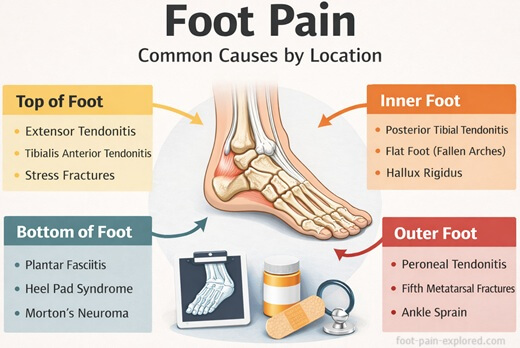
A foot pain diagram is one of the easiest ways to narrow down what might be causing pain in your foot or ankle.
Different structures - bones, tendons, ligaments, joints, and nerves - are stressed in different areas, so where you feel pain provides important clues.
The foot pain charts below help you identify the most common causes of foot pain by location. If your pain is fairly general, use our interactive foot map. If your pain is more in a specific location, use our foot pain location charts.
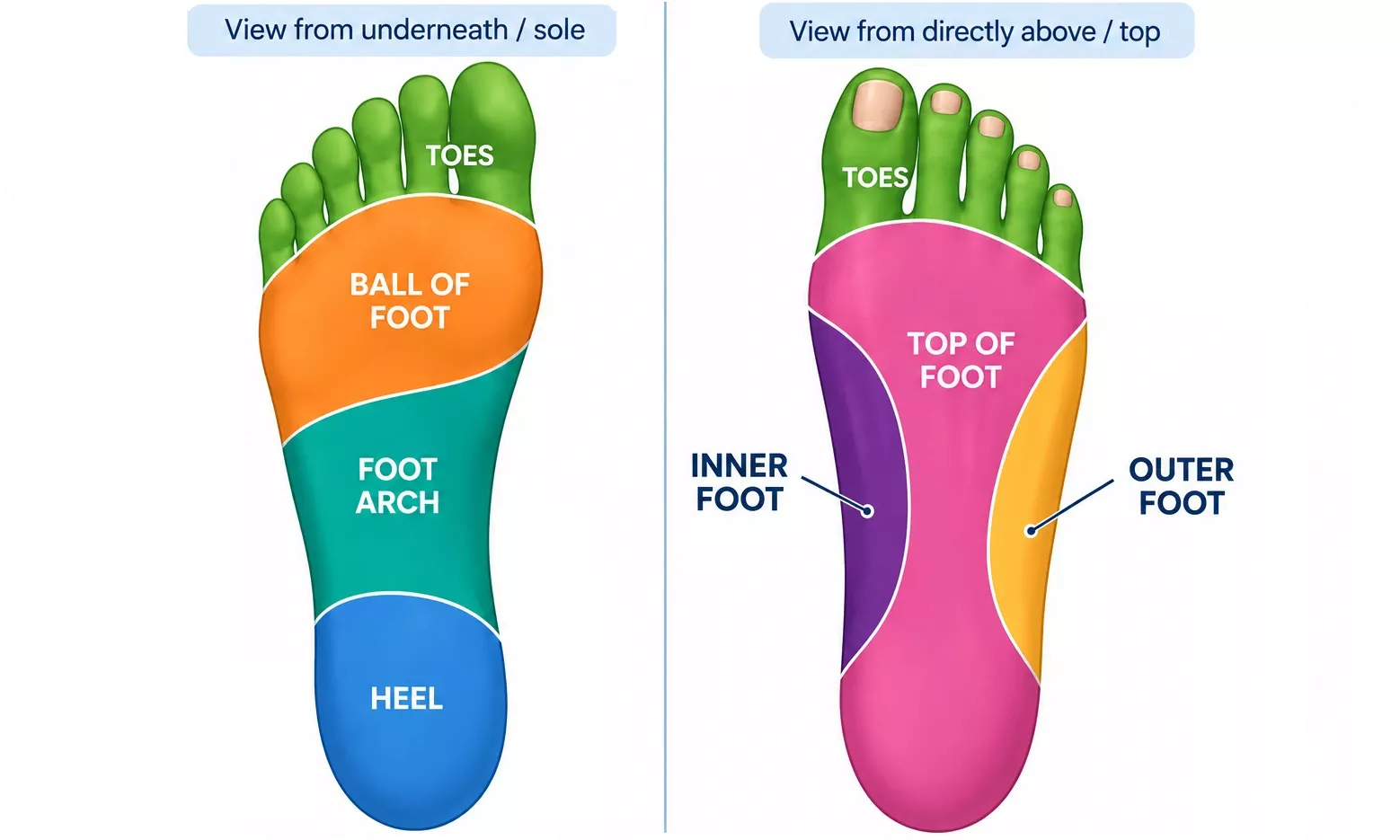
Interactive Foot Pain Map
If your foot pain is in a fairly generalised region rather than in a specific location, click on the painful area below to find out about the possible causes, otherwise keep reading for more specific diagnosis.
Foot Pain Location Charts
Each region of the foot contains different structures and is exposed to different stresses during walking, running, and standing.
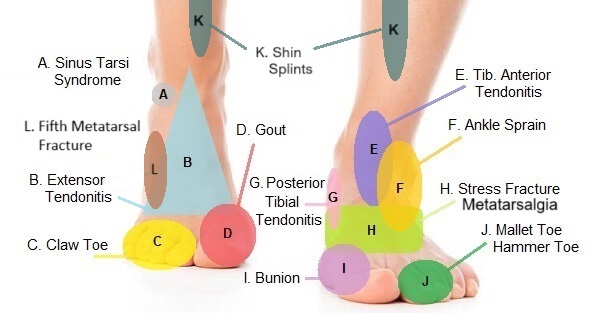
How To Use Our Foot Pain Diagrams:
- Identify the exact area where you feel pain in your foot or ankle
- Find the matching area on the diagram below
- Use the list to see the most common causes of pain in that location
- Follow the links to learn more about diagnosis and treatment
Top/Front Foot Pain Chart
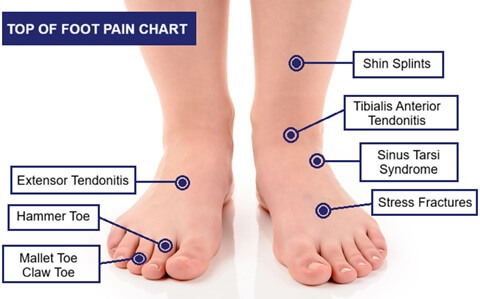
Our first foot pain diagram shows common causes of pain on the top or front of the foot.
Pain here is often caused by irritation of the tendons that lift the foot and toes, joint stiffness, or stress fractures from repetitive loading.
- Extensor Tendonitis: Inflammation of the tendons that lift the toes, causing pain across the top of the foot, especially with walking or resisted toe extension.
- Tibialis Anterior Tendonitis: Irritation of the tendon at the front of the ankle, typically causing pain when walking downhill or downstairs.
- Foot Stress Fractures: Small cracks in the metatarsals or other foot bones, caused by repetitive overloading or sudden activity increases.
- Toe Deformities (Claw, Hammer & Mallet Toes): Abnormal bending of the toes due to muscle imbalance or footwear pressure, causing pain and irritation on top of the toes.
There are lots of other less common causes of top of foot pain such as Sinus Tarsi Syndrome and Shin Splints. Find out all about the causes, symptoms and treatment of each in the pain on top of foot section.
Bottom Of Foot & Heel Pain Diagram
This foot pain diagram looks at the common causes of pain under the foot and pain around the heel.
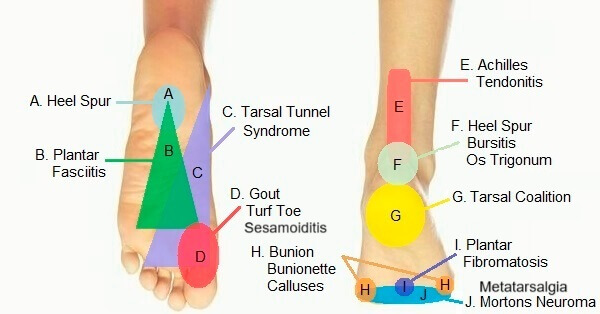
- Plantar Fasciitis: Inflammation
or degeneration of the plantar fascia causing heel pain that is worst first
thing in the morning or after rest. Worse when you first start to walk, standing on tiptoes and walking up stairs
- Heel Bone Spurs: Abnormal bony growths on the underside or back of the heel that can cause pain when walking or standing
- Achilles Tendonitis: Overuse injury of the calf muscles and Achilles tendon, leading to pain, stiffness, and sometimes swelling at the back of the heel
- Heel Bursitis: Inflammation of the bursa at the back of the heel from repetitive friction causing swelling, tenderness, and pain with pressure
- Heel Pad Syndrome: Thinning or irritation of the cushioning fat pad under the heel, resulting in deep, bruised-type pain
- Tarsal Tunnel Syndrome: Compression of a nerve on the inner ankle causing burning, tingling, or shooting pain into the heel and arch
- Mortons Neuroma: Thickening of the nerve between the toes causing sharp, stabbing pain in the ball of the foot, often described as walking on a pebble
There are a number of other less common causes of pain in this area such as sesamoiditis, os trigonum, plantar fibromatosis and metatarsalgia. Find out more about foot arch pain and heel pain causes.
Inner Foot Pain Location Chart
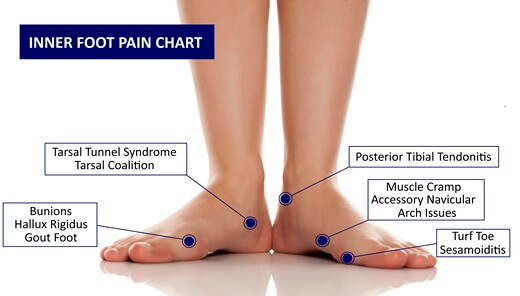
This diagram shows common causes of pain along the inside of the foot.
Inner foot pain is often linked to arch-supporting structures such as tendons, or big toe joint issues.
- Posterior Tibial Tendonitis: Inflammation or degeneration of the tendon that supports the foot arch,
causing pain and swelling on the inner ankle and difficulty standing on
tiptoes
- Foot Bunions: Deformity of the big toe joint causing pain, swelling, and pressure along the inner forefoot
- Hallux Rigidus: Arthritis of the big toe joint causing stiffness, swelling, and pain, particularly when pushing off during walking
- Gout Foot: Build-up of uric acid crystals in the big toe joint causing sudden, severe pain, swelling, and redness
There are lots of other conditions that can cause inner foot pain such as Tarsal Coalition and Accessory Navicular issues. Find out more about pain on inside of foot and big toe pain and how to treat them.
Outer Foot Pain Diagnosis Chart
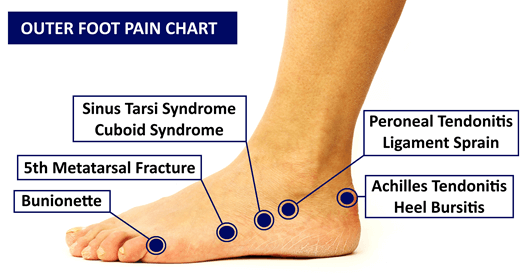
This diagram highlights common causes of pain along the outside of the foot and ankle.
Outer foot pain is often caused by ligament, tendon, or bone injuries.
- Twisted Ankle Sprain: Injury
to the lateral ankle ligaments that causes pain, swelling, and
instability, usually from rolling your ankle
- Peroneal Tendonitis: Inflammation of the tendons running behind the outer ankle, often after ankle sprains
- Cuboid Syndrome: Irritation or subtle displacement of the cuboid bone causing sharp pain along the outer midfoot, often after ankle injuries.
- Fifth Metatarsal Fractures: There are lots of different types of fracture of the fifth metatarsal, depending on where the bone breaks. Usually caused by twisting injuries or awkward landing
There are a number of other things that can cause pain in this area such as bunionettes. Find out more in the pain on outside of foot section.
Common Foot Pain Symptoms Linked to the Diagrams
Different symptoms can indicate different causes of foot pain, from tendon injuries to nerve irritation. If you’re unsure which condition best matches your pain location, looking at your other symptoms can help narrow things down.
Common foot pain symptoms include:
- Altered Sensation & Nerve Pain: Tingling, burning, or shooting pain from nerve irritation.
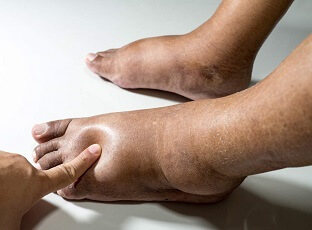
- Swollen Feet & Ankles: Inflammation or fluid buildup indicating tendon, ligament, or joint issues.
- Burning Foot Pain: Often caused by nerve entrapment or overuse.
- Foot Pain When Running: Discomfort during activity from stress fractures, tendonitis, or poor footwear.
- Foot Lumps & Bumps: Bony or soft tissue growths such as bunions or cysts.
- Morning Foot Pain: Stiffness when first getting out of bed, often due to plantar fasciitis or arthritis.
- Sudden Foot Pain Without Injury: Abrupt onset, possibly from gout, nerve irritation, or acute stress fractures.
What to Do Next
Identifying the cause of your foot pain is the first step toward effective treatment. Many foot problems improve with simple measures such as activity modification, supportive footwear, stretching, and strengthening exercises.
However, you should seek professional assessment if:
- Pain is severe or worsening
- You cannot bear weight
- There is significant swelling or deformity
- Symptoms persist despite rest
- You experience numbness, weakness, or night pain
If you are unsure about your pain, a professional foot pain diagnosis can pinpoint the exact cause and guide treatment.
FAQs on Foot Pain Diagnosis
Here you'll find answers to the most frequently asked questions about foot pain diagnosis.
Q1:
Why does my foot hurt without an injury?
Q1: Why does my foot hurt without an injury?
Foot pain can appear gradually from overuse, poor footwear, flat feet, or arthritis. Sudden pain without trauma may be due to gout, nerve irritation, or stress fractures.
Q2:
Can nerve issues cause foot pain?
Q2: Can nerve issues cause foot pain?
Yes. Tingling, burning, numbness, or shooting pain often points to nerve irritation such as tarsal tunnel syndrome, Morton’s neuroma, or peripheral neuropathy. Nerve pain may come with altered sensation, making it different from muscle or bone pain.
Q3:
How can I tell if my foot pain is serious?
Q3: How can I tell if my foot pain is serious?
Seek professional help if you have:
- Severe or worsening pain
- Inability to bear weight
- Swelling, redness, or deformity
- Persistent numbness, weakness, or night pain
These signs may indicate fractures, severe tendon or nerve issues, or infections.
Q4:
Can shoes or activity trigger foot pain?
Q4: Can shoes or activity trigger foot pain?
Absolutely. Tight, narrow, or unsupportive shoes can worsen bunions, toe deformities, or plantar fasciitis. High-impact activities like running or jumping can strain tendons, joints, and bones, increasing the risk of stress fractures or foot tendonitis.
Q5:
What should I do first if my foot hurts?
Q5: What should I do first if my foot hurts?
Start with rest, supportive shoes, stretching, and ice. Persistent, worsening, or mobility-limiting pain should always be evaluated by a healthcare professional for proper diagnosis and treatment.
Q6. What are the most common causes of foot pain?
Q6. What are the most common causes of foot pain?
Foot pain can come from many sources, depending on location and activity. Common causes include:
- Tendon injuries: Extensor, tibialis anterior, Achilles, or peroneal tendonitis
- Joint problems: Bunions, hallux rigidus, or arthritis
- Bone issues: Stress fractures, fifth metatarsal fractures, bone spurs
- Nerve irritation: Morton’s neuroma or tarsal tunnel syndrome
- Soft tissue problems: Heel pad syndrome, plantar fasciitis, or bursitis
- Deformities or overuse: Claw, hammer, or mallet toes, flat feet, or repetitive strain
Q7.
How do I perform a foot pain diagnosis at home?
Q7. How do I perform a foot pain diagnosis at home?
Check exactly where it hurts, note swelling or stiffness, track triggers like walking or running, and compare with a foot pain diagram. Seek professional help if pain is severe or persistent.
Foot Pain Diagram Summary
A foot pain diagram is one of the easiest ways to understand what’s causing your discomfort. By identifying exactly where your foot hurts you can narrow down potential causes, from tendon and ligament injuries to stress fractures or joint problems.
Symptoms like swelling, burning sensations, numbness, stiffness, or sharp pain can provide additional clues, helping you match your experience to the correct condition.
Many foot problems improve with supportive footwear, rest, stretching, and strengthening exercises, but persistent or severe pain should always be evaluated by a professional.
Using a foot pain diagram empowers you to quickly pinpoint possible issues, explore causes, and take informed steps toward treatment — helping you stay mobile, active, and pain-free.
Our foot pain charts show the top, bottom, inner, and outer regions of the foot and help you identify potential causes of pain. You may also find these guides helpful to identify foot pain:
There are other common causes of foot and ankle pain not seen on the foot pain diagrams here such as Trench Foot and Foot Cramps but these tend to give more general symptoms throughout the foot rather than causing pain in specific places as shown on these foot pain diagnosis charts.
Related Articles

Medical References
- Foot Pain. NHS UK
- Foot Pain & Problems. John Hopkins Medicine
- Common Painful Foot and Ankle Conditions: A Review. The Journal Of The American Medical Society - JAMA
- Understanding The Nature And Mechanism Of Foot Pain. Journal Of Foot & Ankle Research
Page Last Updated: 21st September, 2026
Next Review Due: 21st September, 2028

Visitor Comments
"Thank you so much! Your website is a fountain of information!" Retha, US
"Your info took me straight to the problem. Well described and clearly explained." Rick, US
"Thanks for having these exercises available! I performed a few and they have helped tremendously with my foot pain." Jennifer, UK
"I have suffered these symptoms for over a year, seen two doctors and a physio. None of them diagnosed this." Lezlee, UK
"Very interesting! All good information. Tried a few stretches, already feels good." Cindy, US
"3 days ago I thought I was going to need foot surgery. I NEVER thought that stretching my calf would relieve the excruciating pain at the top of my foot. Thank you!!" Rich, US
The material on this website is
intended for educational information purposes only for the general public.
It should not delay or
substitute medical advice, diagnosis or treatment.
© foot-pain-explored.com 2013-2026
Updated 22nd September 2026
Foot-Pain-Explored.com is a trading name of Wilson Health Ltd. All rights reserved. Terms & Conditions apply

Contact Us About Us Blog Privacy Policy Advertising Policy Sitemap