- Home
- Common Foot Problems
- Plantar Fasciitis
- Strengthening Exercises
Plantar Fasciitis Exercises
Written By: Chloe Wilson BSc(Hons) Physiotherapy
Reviewed By: FPE Medical Review Board
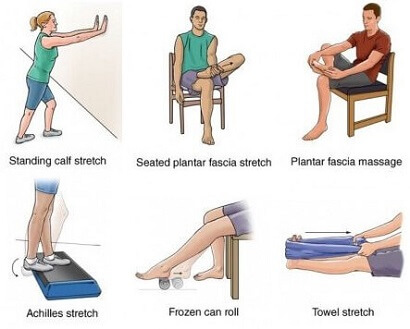
Plantar Fasciitis exercises aim to strengthen and stretch the foot, ankle and calf muscles.
When done correctly, exercises help to reduce plantar fasciitis pain and inflammation.
The most common symptom of plantar fasciitis is pain underneath the foot, especially around the heel.
Plantar fasciitis is usually worst first thing in the morning when you get out of bed, eases of as you walk around and then returns after you have been on your feet for a while.
It is important to do a combination of strengthening and stretching plantar fasciitis exercises both in order to treat the condition and to prevent it coming back in the future.
Strength Plantar Fasciitis Exercises
Here, we will look at the best strengthening plantar fasciitis exercises. They help to improve the strength, control, co-ordination and balance around the foot. If you haven’t already do so, do also take a look at the Stretching Exercises and Top 10 Treatments for plantar fasciitis sections.
1. Towel Scrunches
This is one of my favourite plantar fasciitis exercises. It helps to
strengthen the intrinsic muscles which support the foot
arches. Easy to do while you sit and watch TV
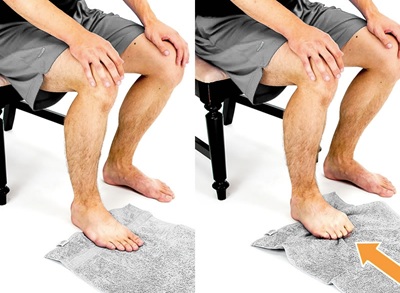
Starting Position: Lay a towel out on the floor and sit with your foot resting on towel, flat on the floor
Action: Try and draw the towel towards you by scrunching your toes. Keep the heel in contact with the floor throughout
Repetitions: Spend 1-2 minutes doing this
Top Tips: You can still do this plantar fasciitis exercise without a towel, just mimic the action
2. Marble Pick-Ups
This is another fun one of the plantar fasciitis exercises. It helps to improve the strength and control around the foot
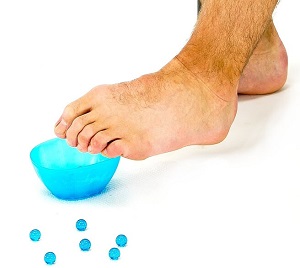
Starting Position: Place some marbles and a bowl on the floor
Action: Pick each marble up with your toes and drop it in the bowel
Repetitions: Spend 1-2 minutes doing this, twice a day
Variations: You can use any small items e.g. dice or pencil instead of marbles
3. Foot Arch Lifts
Foot arch lifts are good plantar fasciitis exercises to start with as they specifically targets the muscles underneath the foot that support the foot arches. Weakness here is a common cause of plantar fasciitis
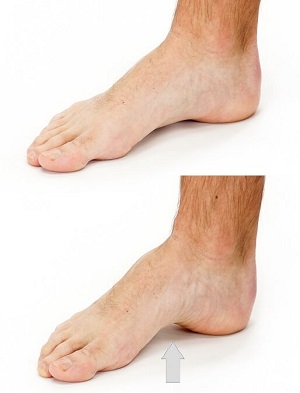
Starting Position: Sit on a chair with your foot resting flat on the floor
Action: Draw the arch of the foot up off the floor, keeping the heel, big toe and ball of the foot on the floor. Hold for 3 seconds and relax
Repetitions: Spend about 1 minute doing this
Progression: Perform the exercise in standing
Top Tips: It may take a few goes to work out how to get your foot doing this action correctly. You can place a coin underneath the base of your big toe and ensure that you keep resting on throughout for extra feedback. It won’t feel like you are doing much, but it really makes a difference
4. Heel Raises
Weakness in the calf muscles is a common cause of plantar fasciitis as it affects how the foot moves. This is just one way to strengthen the calf muscles – visit the calf strengthening section for a wider range of exercises
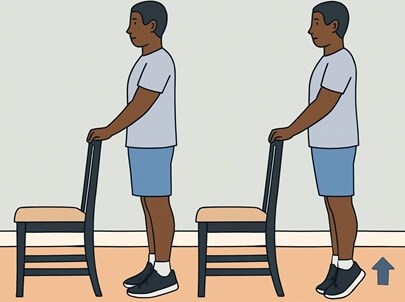
Starting Position: Stand with your feet resting flat on the floor. You can hold onto a chair or the wall for balance if needed
Action: Push up, lifting your heels of the floor as you come up onto tiptoes. Hold for 3-5 seconds and slowly lower down
Repetition: Do 3 sets of 10 repetitions
Progression: Once you can do 30 repetitions, try doing one leg at a time
Top Tips: Try to take your weight equally on both feet. If that is too difficult to start with, let your good foot do more of the work and gradually progress to equal work as able.
5. Tip Toe Walking
This is a simple but effective way to improve the strength of your calf and improve the control and stability around the ankle as part of your plantar fasciitis exercises

Starting Position: Standing
Action: Rise up onto both tip toes and walk around, staying up throughout.
Repetitions: Spend a couple of minutes doing this every day
Variations: Walk forwards, backwards, sideways and in circles
6. Single Leg Standing
This is a great way to improve your balance and the control around the foot making it a great plantar fasciitis exercise
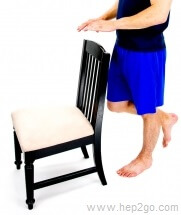
Starting Position: Standing by a chair or the wall for balance
Action: Lift one foot off the floor so you are balancing on one leg
Repetition: Spend 5 minutes doing this, 2x daily.
Progression: Once you feel confident with this exercise, try closing your eyes – you should find it a lot more challenging
Top Tips: Build this plantar fasciitis exercise into part of your daily routine by doing it e.g. when brushing your teeth, waiting for the kettle to boil etc.
FAQs on Plantar Fasciitis Exercises
1. What Are The Best Exercises For Plantar Fasciitis?
1. What Are The Best Exercises For Plantar Fasciitis?
Some of the best exercises for plantar fasciitis include calf stretches, plantar fascia stretches, towel scrunches, and toe curls. These help loosen tight tissues in the sole of the foot and calf, improve flexibility, and reduce strain on the plantar fascia. Regular stretching—especially in the morning and after activity—can make a big difference in pain relief and recovery.
2. How Often Should I Do Plantar Fasciitis Exercises?
2. How Often Should I Do Plantar Fasciitis Exercises?
For best results, aim to do your stretching exercises two to three times a day and strengthening exercises once a day. Morning stretches are especially important since pain is often worse first thing due to overnight tightening of the fascia. Consistency is key—doing a little every day helps the tissue heal and stay flexible.
3. How Long Does It Take For Plantar Fasciitis To Improve With Exercises?
3. How Long Does It Take For Plantar Fasciitis To Improve With Exercises?
Most people notice improvement within 2 to 6 weeks of regular exercise and self-care. However, full recovery can take up to 3 months or more depending on how severe your plantar fasciitis is and how long you’ve had it. If your pain isn’t improving after 6–8 weeks of exercises, it’s worth checking in with a physical therapist or podiatrist.
4. Should I Do Plantar Fasciitis Exercises If My Foot Hurts?
4. Should I Do Plantar Fasciitis Exercises If My Foot Hurts?
Gentle stretching is safe and beneficial even if your heel is sore, but you should avoid high-impact or painful movements. Start slowly and focus on controlled, comfortable stretching rather than pushing through sharp pain. If an exercise increases your pain during or after, stop and rest, then try again more gently the next day.
5. Can Exercises Cure Plantar Fasciitis Permanently?
5. Can Exercises Cure Plantar Fasciitis Permanently?
Exercises play a major role in both treating and preventing plantar fasciitis. They help reduce inflammation, improve flexibility, and strengthen the foot arch to stop the problem coming back. However, for long-term relief you should also address contributing factors such as poor footwear, tight calves, or excessive standing.
6. Are There Exercises I Should Avoid With Plantar Fasciitis?
6. Are There Exercises I Should Avoid With Plantar Fasciitis?
Yes — avoid running, jumping, or sudden explosive movements while your heel is painful, as these can worsen irritation of the plantar fascia. Stick to low-impact activities like cycling, swimming, or gentle walking until symptoms ease.
7. Do Plantar Fasciitis Night Splints Or Massage Help
Alongside Exercises?
7. Do Plantar Fasciitis Night Splints Or Massage Help Alongside Exercises?
Yes, they can be great additions. Night splints keep the plantar fascia gently stretched overnight, reducing morning stiffness, while massage or rolling the foot over a frozen bottle or ball helps relieve tension and improve circulation. Combining these with daily exercises gives faster, more lasting relief.
8. Should I Do Plantar Fasciitis Exercises Before Or After Walking Or Running?
8. Should I Do Plantar Fasciitis Exercises Before Or After Walking Or Running?
Ideally, do a few gentle stretches before activity to warm up the tissues, and then repeat after to cool down and prevent tightness. If you’re currently in a painful phase, focus more on stretching before getting out of bed and after periods of rest rather than before heavy exercise.
9. Can Plantar Fasciitis Exercises Help Flat Feet Or High Arches?
9. Can Plantar Fasciitis Exercises Help Flat Feet Or High Arches?
Absolutely. Many of the same exercises—like toe curls, towel scrunches, and calf stretches—help improve arch support and strengthen the foot muscles that stabilise your plantar fascia. Whether your arch is flat or high, regular stretching and strengthening can reduce your risk of flare-ups.
10. When Should I See A Doctor Or Physio About Plantar Fasciitis?
10. When Should I See A Doctor Or Physio About Plantar Fasciitis?
If your heel pain hasn’t improved after 6–8 weeks of consistent exercises and home treatment, or if pain is severe, you should see a physical therapist, podiatrist, or orthopaedic specialist. They can check for other causes of heel pain and guide you with a tailored exercise and treatment plan.
What Else Can Help?
To get the most benefit from plantar fasciitis exercises, it is essential to be stretching as well as strengthening the muscles – find out more about how to effectively stretch in the plantar fasciitis stretches section. You will need to do exercises for a good few weeks and should continue until your symptoms have completely settled, otherwise the problem is likely to return.
Plantar fasciitis exercises are only one part of treatment, there are lots of other things that can help.
You can find out more in the Top 10 Plantar Fasciitis Treatments section including information on orthotics/shoe inserts, night splints, injections, ice and more.
You may also be interested in the exercises for heel pain article.
If you have more questions such as what is plantar fasciitis, what are the symptoms and how to prevent it, visit the plantar fasciitis overview.
Related Articles
- Home
- Foot & Ankle Exercises
- Strengthening Exercises
Page Last Updated: 7th November, 2025
Next Review Due: 7th November, 2027

Visitor Comments
"Thank you so much! Your website is a fountain of information!" Retha, US
"Your info took me straight to the problem. Well described and clearly explained." Rick, US
"Thanks for having these exercises available! I performed a few and they have helped tremendously with my foot pain." Jennifer, UK
"I have suffered these symptoms for over a year, seen two doctors and a physio. None of them diagnosed this." Lezlee, UK
"Very interesting! All good information. Tried a few stretches, already feels good." Cindy, US
"3 days ago I thought I was going to need foot surgery. I NEVER thought that stretching my calf would relieve the excruciating pain at the top of my foot. Thank you!!" Rich, US
The material on this website is
intended for educational information purposes only for the general public.
It should not delay or
substitute medical advice, diagnosis or treatment.
© foot-pain-explored.com 2013-2026
Updated 4th June 2026
Foot-Pain-Explored.com is a trading name of Wilson Health Ltd. All rights reserved. Terms & Conditions apply

Contact Us About Us Blog Privacy Policy Advertising Policy Sitemap